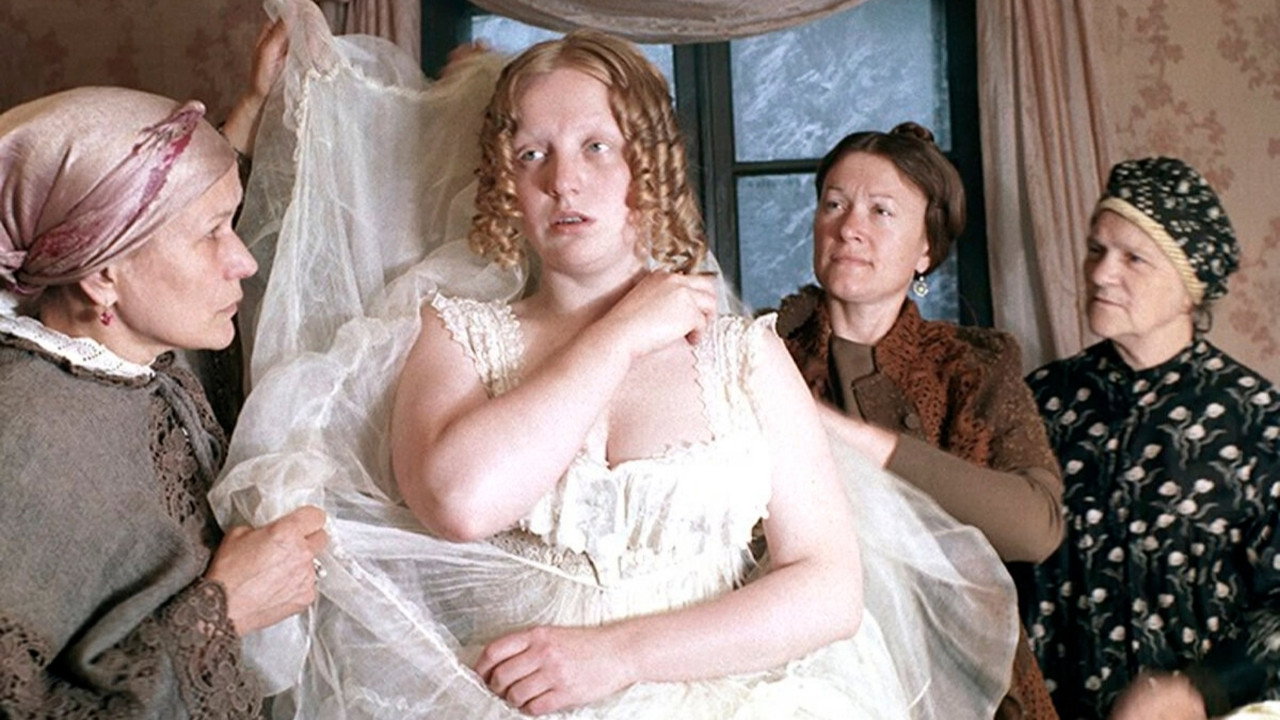

Marriage
1978, Russian. Directed by Vitaliy Melnikov.
Succumbing to the persuasion of his friend Kochkaryov, a middle-aged court adviser Podkolyosin wooed to the overripe girl Agafya Tikhonovna, a merchant's daughter. At the very last moment, having gone through a painful period of matchmaking, and bringing the matter to a wedding, indecisive grief — the groom escapes from under the crown, jumping into the window...
- Runtime
- 1h 34m
- Post-credits
- None listed
- Language
- Russian
- Rated
- Check local
Start now and it ends at ….
Too new to call
Not enough people have rated it yet for a verdict.
Seen it? Give your verdict.
Saved privately on this device.
Where to watch Marriage
Marriage isn’t streaming on any OTT platform in India yet; it released on 22 May 1978.
No streaming listings yet. Search JustWatch.
Cast & crew
Details
- Released
- 22 May 1978
- Original title
- Женитьба
- Country
- Soviet Union
- Written by
- Vitaliy Melnikov
Check ratings elsewhere
News & fan talk
What Marriage is based on
Marriage is based on Marriage (1842) by Nikolai Gogol.
1842
Marriage
By Nikolai Gogol
Source details from Wikidata and TMDB.
If you liked Marriage

Kidnapping, Caucasian Style
1967 · 7.7/10
Worth the HypeRecommended by TMDB viewers

The Wedding Year
2019 · 5.9/10
SnoozefestRecommended by TMDB viewers
Hello
Hello
2013 · 6.1/10
Popcorn FlickRecommended by TMDB viewers

Much Ado About Nothing
2013 · 6.8/10
Popcorn FlickRecommended by TMDB viewers

I'm Losing It
2018 · 6.6/10
Popcorn FlickRecommended by TMDB viewers

What a Mess!
1995 · 6.6/10
Popcorn FlickRecommended by TMDB viewers
Gabriel Iglesias: I'm Sorry for What I Said When I Was Hungry
2016 · 7.0/10
Worth the HypeRecommended by TMDB viewers

Adam Sandler: Love You
2024 · 6.3/10
Popcorn FlickRecommended by TMDB viewers
Maksim Perepelitsa
1955 · 6.9/10
Popcorn FlickRecommended by TMDB viewers

After the Ball
2015 · 6.3/10
Popcorn FlickRecommended by TMDB viewers
Marriage: quick answers
Is Marriage worth watching?
Marriage doesn’t have enough ratings for a verdict yet.
How long is Marriage?
Marriage runs 94 minutes (1h 34m).
Does Marriage have a post-credits scene?
None is listed for Marriage. Viewers tag these on TMDB, so a brand-new film may not be tagged yet.
Marriage parents guide: is it suitable for kids?
No age rating is listed for Marriage yet.
Which OTT platform is Marriage on?
Marriage isn’t streaming on any OTT platform in India yet; it released on 22 May 1978. (Checked 10 November 2026.)
What movies are like Marriage?
If you liked Marriage, try Kidnapping, Caucasian Style, The Wedding Year, Hello.
Who directed Marriage?
Marriage (1978) was directed by Vitaliy Melnikov and stars Svetlana Kryuchkova, Aleksey Petrenko, Oleg Borisov.
What is Marriage based on?
Marriage is based on Marriage (1842) by Nikolai Gogol.